

When sourcing eyewear, beautiful frame design is only part of the equation. Long-term durability, wearer comfort, safety compliance, and consistent product quality all depend on a comprehensive quality inspection process.
For eyewear brands, importers, distributors, and retailers, understanding how eyewear is tested can help reduce product returns, improve customer satisfaction, and protect brand reputation.
In this guide, we'll walk through the key quality inspection procedures used in modern eyewear manufacturing and show how Mellume's in-house testing laboratory helps ensure every frame meets international quality standards.
Why Quality Inspection Matters in Eyewear Manufacturing
Eyeglasses and sunglasses are daily-use products exposed to constant opening and closing, body oils, sweat, UV radiation, humidity, and accidental impacts.
Without proper testing, common quality issues may occur:
* Loose or squeaky hinges
* Warped frame fronts
* Lens cracking or detachment
* Surface discoloration
* Coating failure
* Customer complaints and costly returns
Professional quality control helps manufacturers identify potential weaknesses before products reach the market.
1. Material Safety and Integrity Testing
The quality of an eyewear frame starts with its raw materials.
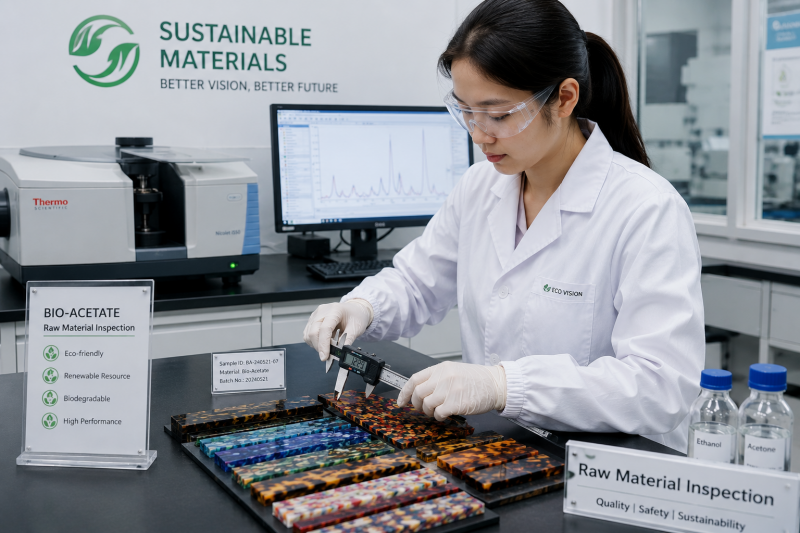
At Mellume, we work with premium materials including bio-acetate, GRS-certified recycled acetate, titanium, stainless steel, and natural buffalo horn.
Sweat Resistance and Skin Contact Testing
Because eyewear remains in direct contact with the skin for extended periods, materials must demonstrate excellent biocompatibility.
Material samples undergo simulated sweat testing to verify:
* Chemical stability
* Low heavy metal content
* Resistance to discoloration
* Reduced risk of skin irritation
Bio-Acetate and Recycled Acetate Verification
Sustainable materials must perform as well as conventional acetate.
Our laboratory verifies that bio-based and recycled acetate materials maintain:
* Dimensional stability
* Color consistency
* Flexibility
* Resistance to cracking and brittleness
2. Structural Durability Testing
Eyewear experiences thousands of opening-and-closing cycles throughout its lifespan.
To evaluate long-term performance, frames undergo mechanical durability testing designed to simulate real-world use.
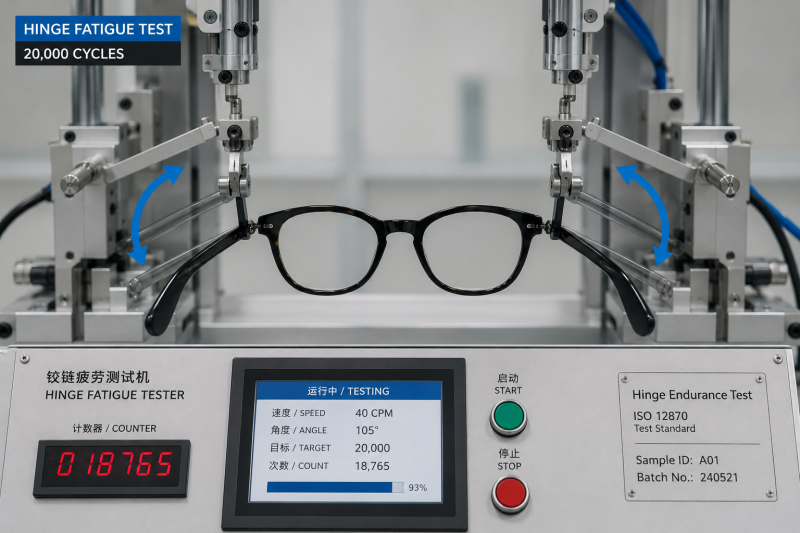
Hinge Endurance Test
The hinge is one of the most stressed components of any eyewear frame.
Testing Procedure
Frames are mounted onto automated fatigue-testing machines that repeatedly open and close the temples under controlled conditions.
Testing Standard
Each frame is subjected to approximately 20,000–30,000 continuous cycles.
The frame must maintain:
* Stable hinge alignment
* Consistent opening resistance
* No screw loosening
* No component breakage
This testing principle follows internationally recognized durability requirements commonly referenced in eyewear quality standards such as ISO 12870.
Bridge Flexibility and Shape Recovery Test
A high-quality frame should flex under pressure without permanent deformation.
Using precision testing equipment, controlled force is applied to the bridge and front frame structure.
After force removal, the frame must return to its original geometry without:
* Warping
* Micro-cracking
* Stress whitening
* Permanent distortion
3. Environmental Aging and Weather Resistance Testing
Eyewear products are exposed to sunlight, temperature fluctuations, and humidity throughout their service life.
Environmental testing helps predict long-term performance under challenging conditions.
UV Aging Test
Frames are exposed to prolonged high-intensity UV radiation to evaluate:
* Color stability
* Surface gloss retention
* Material aging resistance
* Yellowing prevention
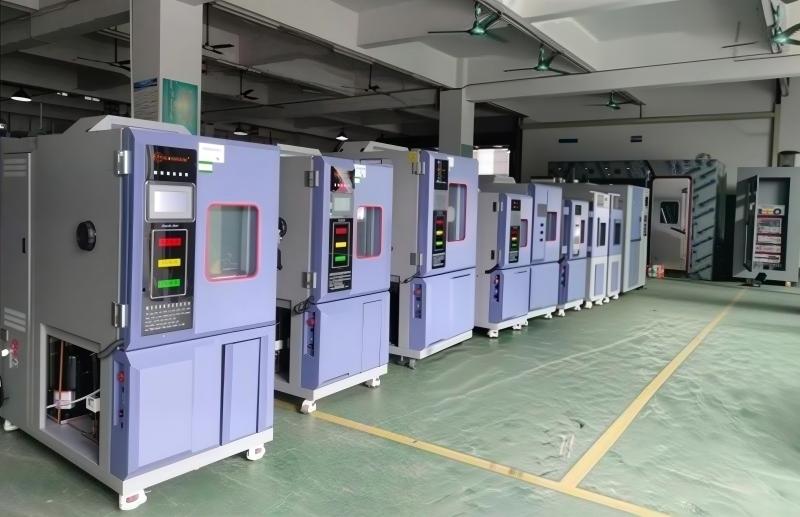
High Temperature and Humidity Test
Environmental chambers simulate extreme conditions commonly found in tropical and coastal markets.
Typical test conditions include:
* Temperature up to 60°C
* Relative humidity up to 90%
After testing, frames are inspected for:
* Delamination
* Surface defects
* Deformation
* Material degradation
4. Lens Safety and Optical Performance Testing
Frame quality is only one part of the eyewear experience. Lens performance plays an equally important role.
UV400 Protection Verification
Using professional spectrophotometers, every lens batch is tested to confirm:
* UV-A blocking performance
* UV-B blocking performance
* UV400 compliance
Polarization Efficiency Testing
For polarized sunglasses, optical alignment is verified to ensure effective glare reduction and visual clarity.
FDA Drop Ball Impact Test
For products supplied to the United States market, lenses are tested according to FDA impact resistance requirements.
A steel ball weighing approximately 16 grams is dropped from a height of 1.27 meters directly onto the lens surface.
Only lenses that remain intact are approved for shipment.

5. Final 100% Manual Quality Inspection
While laboratory equipment provides objective testing data, final product appearance still requires human evaluation.
Every Mellume frame undergoes a complete manual inspection before packaging.
Alignment Inspection
Frames are placed on precision leveling surfaces to verify:
* Temple symmetry
* Front alignment
* Overall balance
Surface Finishing Inspection
Inspectors carefully check for:
* Scratches
* Burrs
* Uneven polishing
* Surface imperfections
Hinge Calibration
Each hinge is manually adjusted to ensure smooth, consistent opening and closing performance.

How Quality Testing Protects Your Brand
Quality testing is not simply a factory procedure—it is a critical step in protecting your brand reputation.
By identifying potential defects before shipment, brands can reduce:
* Customer complaints
* Product returns
* Warranty claims
* Negative online reviews
For growing eyewear brands, investing in reliable manufacturing quality control can significantly improve long-term customer satisfaction.
Inside Mellume's Quality Commitment
At Mellume, quality is not inspected into a product—it is engineered into every stage of manufacturing.
Supported by over 20 years of eyewear production experience and a dedicated in-house testing laboratory in Shenzhen, we help global brands develop durable, compliant, and market-ready eyewear collections.
Our team can customize testing protocols based on destination market requirements, including CE, FDA, UKCA, and REACH compliance standards for OEM and ODM projects.
Looking for a reliable eyewear manufacturing partner?
Contact Mellume today to discuss your next eyewear collection and discover how our quality control process can help strengthen your brand.
Get in touch with our team today to request lab-tested samples and experience the Mellume quality difference firsthand.
Email: social@mellumeeyewear.com
WhatsApp: +86 13829903822
Website: www.mellumeoptical.com